"In this study, we find that that 3.1% of Facebook users in the U.S. experience serious problems with sleep, work performance, or relationships that they attribute to Facebook and find difficult to change. We refer to this as 'problematic Facebook use,' in line with prior academic research on 'problematic Internet use,' which has identified problem rates of 2-8%."
"The most liberal definition would be that 14% of our survey respondents report spending 'a lot more' time on Facebook than they want to."
"Alternately, 11% report one of the negative life impacts (serious problems with sleep, work performance, relationships, or that FB has had a 'very negative impact' on their life)."
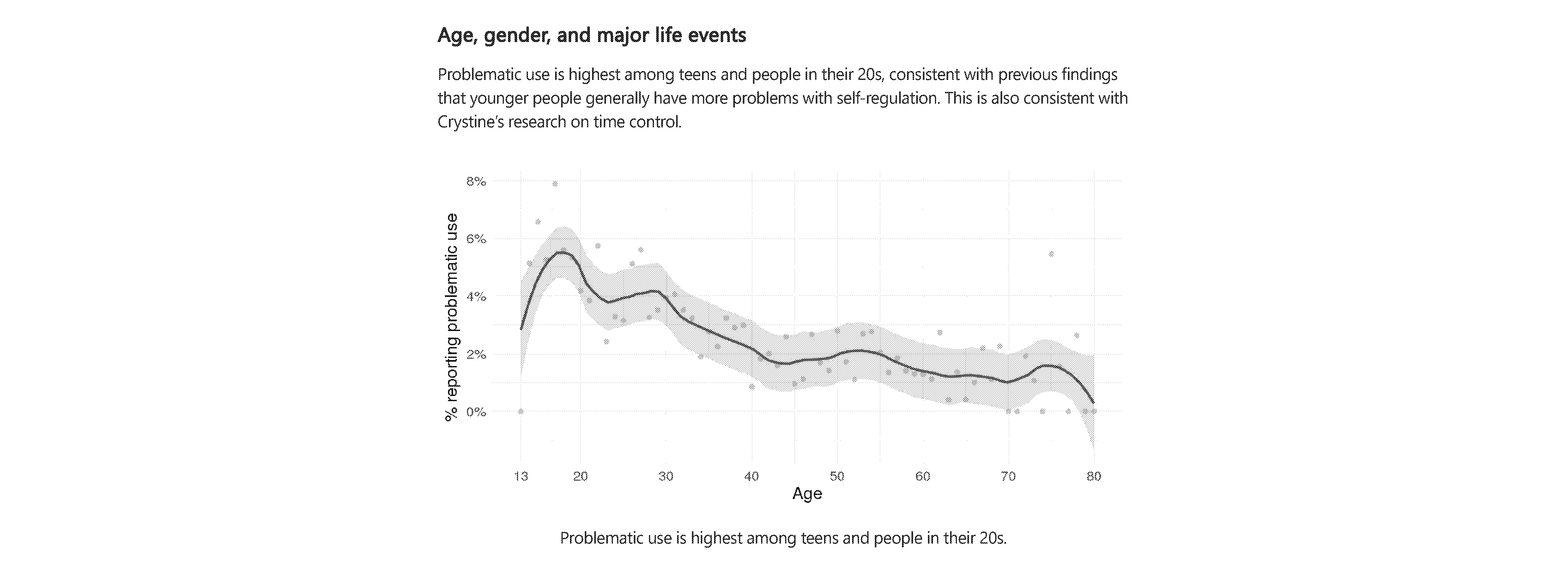
"Problematic use is highest among teens and people in their 20s, consistent with previous findings that younger people generally have more problems with self-regulation."
"People who feel like they have a problem receive more push notifications and 'view through' a greater proportion of them. Though they also respond more quickly to those notifications, those differences are accounted for by age, friend count, and tenure. In academic experiments, smartphone notifications caused inattention and hyperactivity among teens, and they reduced productivity and well-being. This suggests the value of 'Do Not Disturb'-related products in reducing or limiting notifications, or in identifying contexts where notifications may be undesirable."
 Meta & Children's Online Safety