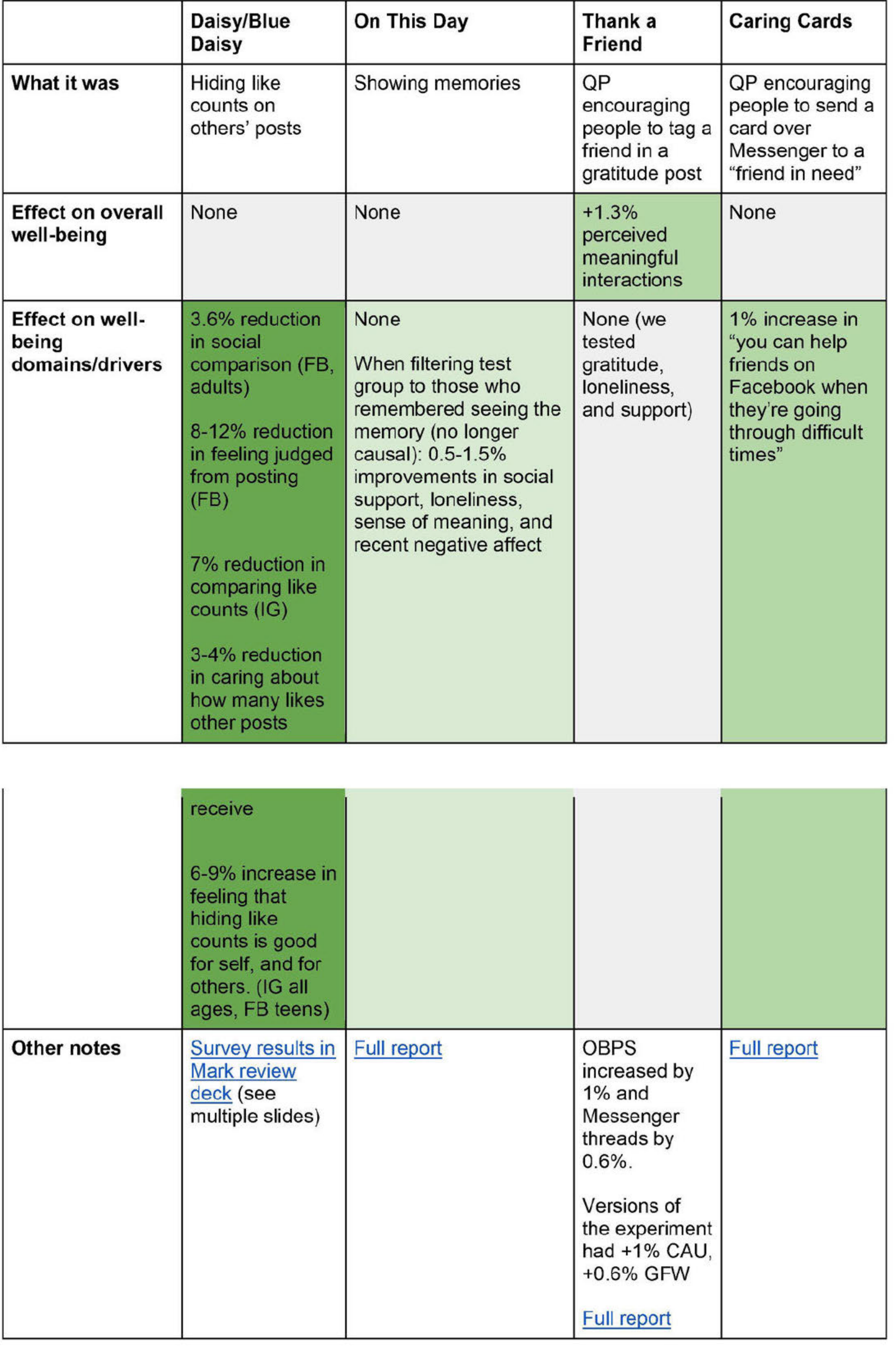
"Hiding Like counts may seem like an unimportant change for well-being. But as Jennifer outlines below, like counts are a key driver of social comparison, and social comparison is a key driver of well-being... there are many factors to consider in this decision, including sessions, revenue, finding popular content, and the comms environment. I hope that the well-being implications can be factored into the decision, as well."
Jennifer Guadagno: "Social comparison is important to loneliness: Social comparison is the most important driver of loneliness. Given our large Inc. wide Loneliness focus that was just approved by Mark, social comparison becomes an important area to focus on as it relates to loneliness. See Chart 1 in data doc.
People perceive FB and IG as having negative impact on social comparison: 21% of people report that Facebook has a negative impact on social comparison (3rd worst area that we measured). 19% of people report that Instagram has a negative impact on social comparison (6th worst area that we measured). See Chart 3 & 4 in data doc.
Best way for FB to significantly contribute to reducing social comparison is through Like counts: From Moira et al's CHI paper seeing high like counts was one of the (changeable) factors most strongly associated with frequency of social comparison on Facebook.
Taken together, as we develop the strategic plan to approach well-being across FB (which is in the works), social comparison is one of, if not THE, most important areas to focus on given associations to well-being and public perception of us harming. Removing like counts is one of, if the THE, most significant levers FB has to reduce social comparison. From a well-being perspective, a ship decision for both IG and FB is recommended – based on above data and survey data from tests related to social comparison/well-being (see Moira's summary). If we decide not to ship on FB, we should be prepared for well-being hits for Facebook in the press and deepening the narrative that FB is falling behind IG on supporting well-being."
Moira Burke: "Hiding Like counts may seem like an unimportant change for well-being. But as Jennifer outlines below, like counts are a key driver of social comparison, and social comparison is a key driver of well-being. There are many other things we could do to reduce social comparison (e.g., downranking self-aggrandizing content, positive emotion, or certain topics in News Feed, or identifying people who may be vulnerable and providing special tools for them). However, those approaches require complex (infeasible) machine learning, the triggers are different for everyone, may do more harm than good (seeing friends' happy moments is beneficial to most people), may reinvigorate the emotional contagion press, and may be inconsistent with GDPR (e.g., inferring mental health status, even with a goal of helping). By comparison, Daisy will have real (if moderate) impact on people's lives, and our tests have been well received by the press. This google doc has more detail on Daisy tradeoffs and relationships to past social comparison research.
We understand that there are many factors to consider in this decision, including sessions, revenue, finding popular content, and the comms environment. I hope that the well-being implications can be factored into the decision, as well."
 Meta & Children's Online Safety